When someone says “China,” what pops into your head? For me, it was: massive cities, a billion people elbowing their way through subway stations, gray skies, and the Great Wall photobombed by a thousand tourists. Nature? Not on my radar.
But plot twist: I was so wrong.
My trip to Xining and beyond completely flipped the script. Turns out, China is an untamed wonderland for nature lovers—think rainbow-colored mountains, mirror-like salt lakes, and deserts that look like they’ve been stolen from another planet. And the best part? Hardly any tourists. Just you, your backpack, and a whole lot of jaw-dropping landscapes.

Why Visit ?
- Unreal Landscapes: Rainbow mountains. Giant salt mirrors. Dunes that touch the sky. It’s like China went all-out to prove it can compete with Patagonia and Utah and then threw in camels & yaks for good measure.
- Diversity, Without the Crowds: You get the best of both worlds: breathtaking landscapes and a cultural richness that’s as diverse as it is accessible. Plus, it’s off the beaten path. I promise you, not many people you know will have visited this area.
- Easy on the Wallet: I traveled by local buses, trains, and hitched shared cabs like a pro. Cheap, fun, and full of weird stories. Who needs a package-tour when adventure is one awkward taxi negotiation away?
- Safe & Friendly: Locals waved, helped us get on the right buses, and even shared their snacks. You’ll feel safe and welcome—even if your Mandarin is limited to ni hao and xiexie.
- China, Unfiltered: Forget polished tourist traps. This is raw, wild China. The kind that makes you feel like you’ve discovered something secret. Because you kind of have.
Best Places to Explore
Danxia (Rainbow Mountains)
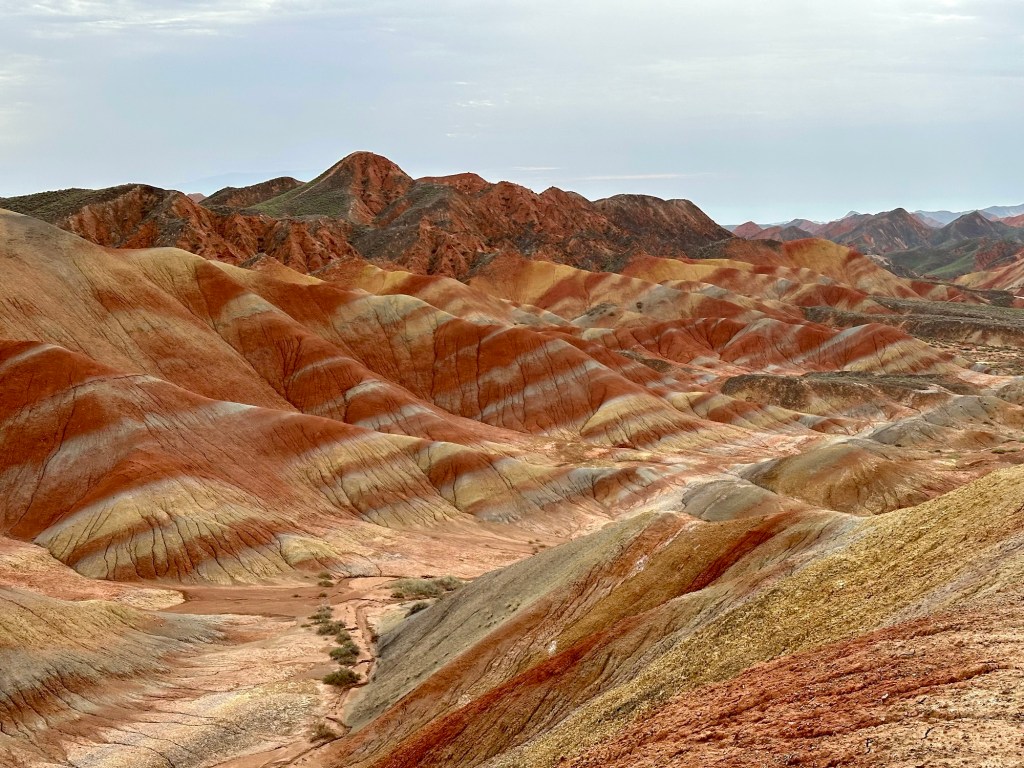
You’ve seen those surreal rainbow-colored mountains on Instagram, right? For years, I thought they were in Peru. Turns out, they’re also in China! And let me tell you, they are every bit as stunning in person as they are online. I went twice—once in the morning, and again during sunset. Sure, the colors might not be as vibrant as those over-saturated photos we see online, but if you love nature, this is the kind of beauty that sticks with you.
- Access: Fast train from Xining to Zhangye ( ~2 hrs, 90 CNY/~16$) then bus to Danxia (50min, 15 CNY/~2.5$). 👉Fast Train Ticket
- Ticket: 92 CNY/ ~16$. 💡Tip: You can return to the park for an add-on of 38 CNY ~7$.( We visited at sunrise and came back to catch the sunset). 👉Buy your ticket here
- Accommodation: Plenty of options nearby. We stayed near the North entrance, I recommend this hotel, brand new and nice owner👉 Shanjian Meiju Intelligent Hotel
Chaka Salt Lake
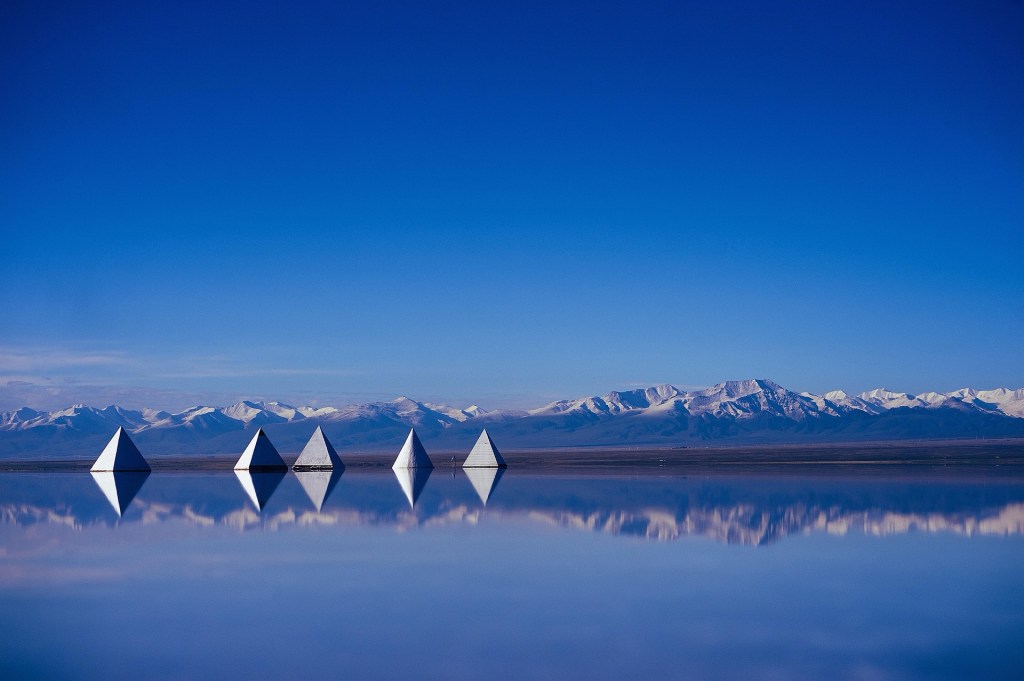
Imagine a giant salt lake that’s like a mirror, reflecting the sky and surrounding mountains. That’s Chaka Lake. It’s not just the size of the landscape that leaves you speechless, it’s how the salt flats seem to go on forever, blending into the horizon. Add the dreamy reflections, and it’s like stepping into another world.
💡Tip: You can stop at Qinghai Lake on you way to Chaka Lake!
- Access: 4-hour scenic bus ride from Xining (84 CNY /~15$), or by train.
- Ticket: 113 CNY ~20$ for the small train, then we walk our way back. Check the promotion here 👉 Chaka Lake attraction ticket
- Guided Trip: 👉Day tour to Qinghai Lake and Chaka Salt Lake .
- Accommodation: 👉Chaqia Salt Lake Tianyu Holiday Inn
Pingshan Canyon (aka Chinese Grand Canyon)
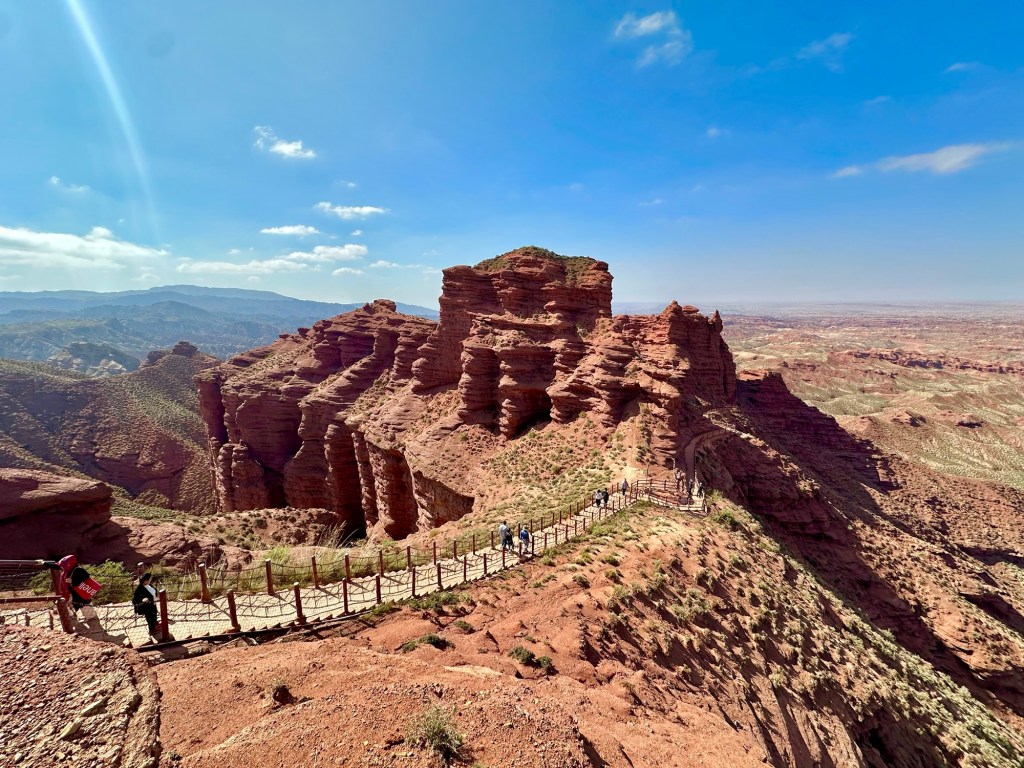
This was the biggest surprise of my trip. We stumbled upon Pingshan Canyon on a whim after reading great reviews. The mini-bus ride to the canyon is bumpy, but once you reach it, you’re met with an awe-inspiring sight. It’s like China’s version of the Grand Canyon, but with a twist. The views from every angle are just incredible, and you can explore different sections on foot.
- Access: from Zhangye, you can take a cab 250 CNY/ ~44$ (round trip) . While writing this post I discovered you can book the ticket + the transfer together for a discounted price, check it 👉Entry ticket + transfer from Zhangye
- Ticket: Affordable.134 CNY/pax ~23$. You have multiple packages with add-on. I recommend to take the basic package with canyon access. 👉 Ticket only (no add-on)
- Accommodation: Stay in Zhangye 👉Yitel Zhishang Hotel
Badain Jaran Desert

I never expected to find a desert in China, let alone one as vast as this. The dunes stretch as far as the eye can see, with some mega dune towering over 1,600 meters (relative height of 500 meters, considered the tallest stationary dune in the world)! To get there, you’ll need a local driver, and let me tell you, these drivers are the real deal. We were off-roading in the dunes, and it felt like a roller coaster—intense, but totally worth it. Along the way, you’ll see lakes of every color and the occasional camel to remind you that you’re in a truly unique place.
- Access: Hard. We hired a cab for 900 CNY (~$160) for a round-trip with overnight wait.
- Ticket: It’s pricey (1695 CNY ~300 USD), but absolutely worth every penny. If you don’t have a local contact to help with booking, try checking 👉Badain Jaran Desert Ticket on Trip.com. We were the only tourists there, so I highly recommend planning ahead to avoid any last-minute surprises. According to the foreign tourist registry, the last visitors before us had come four months earlier!
- Accommodation: You can stay in the desert or in Alxa Right Banner. We stayed here👉Duolan Premium Hotel, the staff was very welcoming. Ask the direction for the best noodle shop around the block !
Jiayuguan Pass
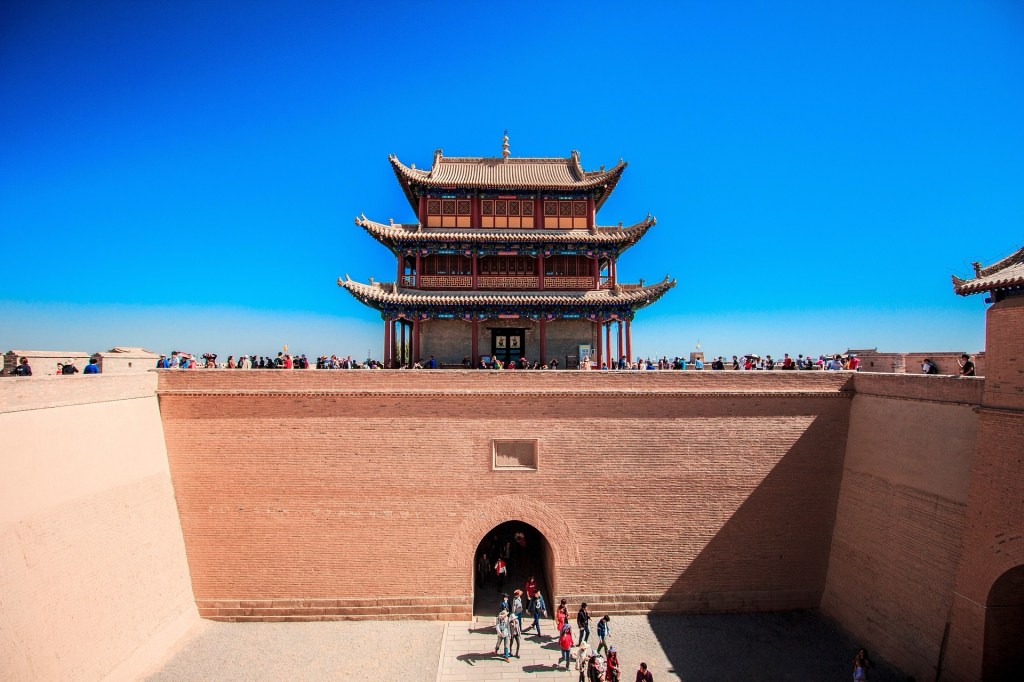
Set against a backdrop of desert and mountains, Jiayuguan Pass marks the western end of the Ming Great Wall. Its fortress includes city walls, towers, and watchtowers, all steeped in history. Expect sweeping views of the Gobi Desert and distant Qilian Mountains—without the crowds. A peaceful, scenic spot for history and nature lovers alike.
- Access: By bus or train. 7$ for 2h30 by fast train from Zhangye 👉train ticket
- Ticket: Guan City Ticket
- Guided Trip: 👉Full-Day Tour to Jiayuguan and Xuanbi from Zhangye
- Accommodation: 👉Nuojin Hotel
Dunhuang
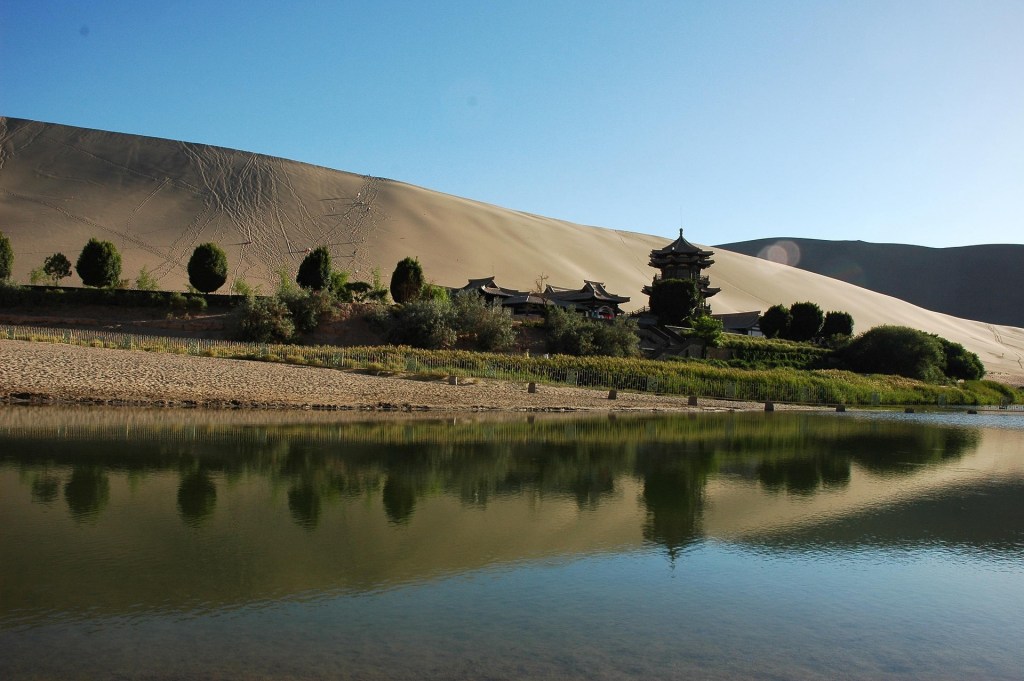
Once a key stop on the Silk Road, Dunhuang is famed for the Mogao Grottoes—ancient Buddhist caves filled with stunning murals. But it’s the surreal desert landscape that truly sets it apart. With easy access to the dunes via Mingsha Mountain and Crescent Spring, it’s a perfect blend of culture and natural wonder.
- Ticket: You can pick the package with the sightseeing of your choice 👉Tickets
- Access: Fast train from Xining to Dunhuang 6h30, 20$ or 4h30 from Zhangye. Book your train ticket here 👉Train ticket
- Guided Trip: 👉Day Tour: Mogao Grottoes, Singing Sand Dunes and The Silk Road Show
- Accommodation: 👉Hexi Corridor Grand Hotel
Practical Tips
📆 Best Time to Visit
Spring or autumn is the way to go. The weather is mild, perfect for outdoor adventures.
🚗 How to Get Around
- Trains: Fast, affordable, and comfortable. Book online for the best deals up to 14 days in advance (unless you want the full local experience, in which case, head to the counter!). 👉Fast Train Ticket
- Buses: No clear stops here. You just raise your hand when you see one and hop on!
- Cabs: More like local uncles with cars. Agree on price before hopping in and enjoy the experience!
🏠 Accommodation
Expect to pay around $30/50 for a comfortable hotel room, and you’ll be pleasantly surprised at how clean and modern they are. For China, I find 👉trip.com have the most hotel choice.
🍜 Food
Delicious. Confusing. Inexplicably spicy. Noodles and rice rule the menus. Sometimes you’ll strike gold, sometimes you’ll eat mystery meat. Finish it off with an egg tart or a Yak yogurt if you are more adventurous and call it a win. You can easily grab a meal for less than $10.
💰 Currency
You’ll need Chinese Yuan (CNY), but don’t worry—you can pay everywhere with Alipay or WeChat Pay. Cash is almost obsolete here.
🌐 Internet Access
You’ll have access to Wi-Fi everywhere, but Google services are blocked. Use Bing China or a VPN for better access. I bought this E-sim to have Google access 👉Airalo e-sim
👗 What to Pack
The altitude is high, so bring light but warm clothing. Layers are your best friend, especially in the mountains. I was grateful for my fleece jacket when the temperatures dropped!
Let’s Be Real
As much as I loved my trip, there were a few surprises.
- The locals are incredibly kind, always offering help and sharing food.
- Language barriers weren’t as bad as I expected. With Google Translate and a big smile, we made it work.
- Technology can be a little glitchy—our translators often gave us some hilarious translations (like “Yes, you can sleep tomorrow” when we asked about food!).
- Public transport was easier than expected, and the infrastructure was impressive!
- On the downside, finding decent restaurants was a bit of a struggle, and sometimes food safety standards were questionable.
Conclusion: Should You Go?
Absolutely.
Despite the bumps along the way, this trip to Xining & around was one of my best adventures yet. If you’re seeking off-the-beaten-path destinations, this is a hidden gem worth discovering. While it’s totally solo-friendly, I do recommend traveling with a buddy—especially if you don’t speak the language! It made all the “WTF” moments more memorable and a lot more fun.
Planning a trip to Xining? Drop your questions or share your experience with me—I’d love to hear from you!
Happy Adventures!
 Travel is Adventures.com
Leave a comment